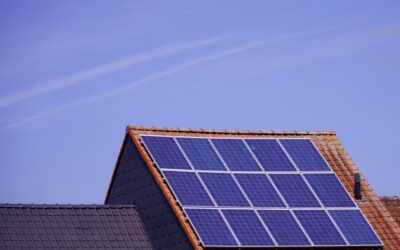
South African households are reducing their dependence on the national grid by tapping into the abundant potential of solar energy. By doing this, consumers are also avoiding a repeat of 2023’s record-breaking 332 days of load shedding.
By embracing a solar-wise lifestyle, South Africans have shown that it is already ahead of its target for cutting greenhouse gas emissions, mostly thanks to intense load shedding. At the same time, Bloomberg states that South Africa’s rooftop solar capacity increased by 349% from March 2022 to June 2023, an unprecedented boom showing the extent to which private citizens and businesses are handling their own electricity needs.
Although the rapid household move to renewable energy sources is for reasons less celebrated, being borne out of necessity due to the country’s energy crisis, it is an achievement that presents a unique opportunity for South Africa to lead a global shift towards sustainable energy that is driven, at least in part, by individual households. The rise in rooftop solar capacity shows how quickly South Africans can demonstrate resilience and innovation to advance the country’s much-needed energy transition. Not only do solar rooftop installations empower consumers with greater control over their electricity during load shedding, but they also simultaneously mitigate the severity of power outages when they happen.
Consumers need to continue to embrace solar as not just a necessity or a social conscience purchase, but also one that will help adjust the GDP deficit from load shedding, that according to the South African Reserve Bank, was reduced in 2023 by an approximate 1,8 percentage points. This, together with the potential of a national feed-in tariff framework, has the potential to be game changers locally.
Examples of the power of these approaches can be seen in Vietnam where feed-in tariff’s were successfully rolled out aiding in a subsequent rooftop solar boom. A country that was once heavily dependent on coal for electricity generation now has more than 101 000 rooftop installations on homes, offices and factories, creating a 25-fold increase in its solar generating capacity in just one-year according to the World Economic Forum. As a result, Vietnam was one of the fastest growing renewable energy markets in Asia, all because of a well-priced and structured national feed-in tariff.
Looking for more interesting and topical reads around solar, energy, savings and latest IoT trends? Check out our full blog here.